Vertical fixation extra predictable for ICL implantation
December 26, 2025
1 min learn

Key takeaways:
- Horizontal fixation ends in bigger postoperative vault.
- Vertical fixation could also be safer and extra predictable.
Utilizing vertical fixation for implantable collamer lens placement might enhance scientific outcomes, in response to a research printed within the Journal of Refractive Surgical procedure.
Shuntaro Tsunehiro, MD, PhD, and colleagues wrote that the latest addition of the KS-AquaPort implantable collamer lens (ICL, STAAR Surgical) has given surgeons the choice to position the lens vertically or obliquely. Moreover, the KS formulation has offered a brand new choice to measurement the lens, which is a vital consider guaranteeing optimum vault outcomes.

Information have been derived from Tsunehiro S, et al. J Refract Surg. 2025;doi:10.3928/1081597X-20250624-06.
“Lately, studies highlighting the advantages of vertical fixation have elevated considerably,” the authors wrote. “Notably, vertically implanted toric ICLs for astigmatism correction have proven diminished postoperative rotation and improved astigmatic axis stability in comparison with horizontal implantation.”
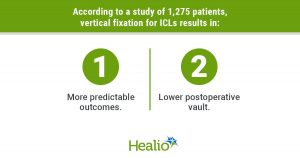
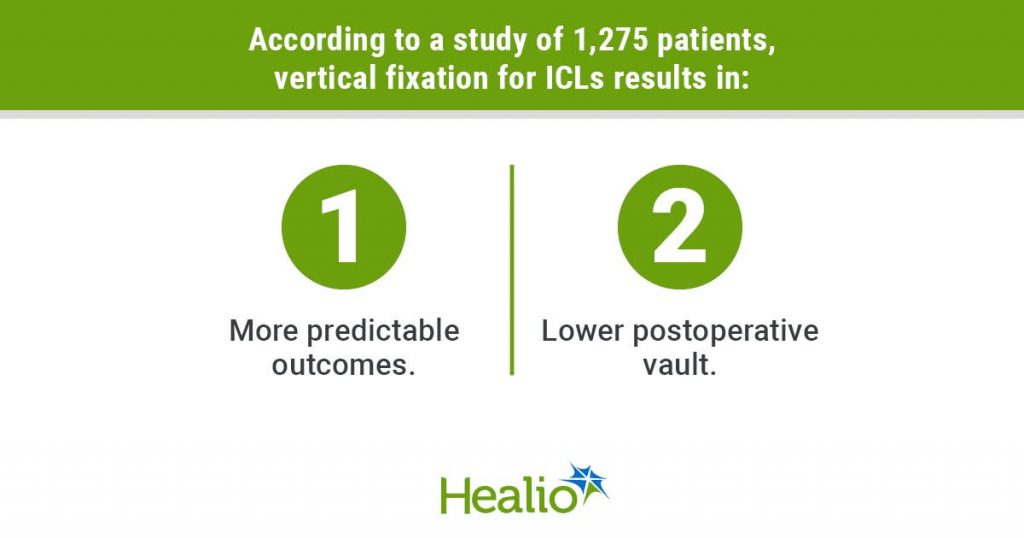
Researchers performed a retrospective evaluation of two,343 eyes from 1,275 sufferers to check postoperative vault outcomes between horizontally fixated ICLs sized utilizing the horizontal model of the KS formulation and vertically fixated ICLs sized utilizing the vertical model.
The horizontal fixation group had a bigger imply postoperative vault (0.5 ± 0.2 mm) in contrast with the vertical group (0.43 ± 0.17 mm; P .001). The horizontal group additionally had a better proportion of eyes with excessive vault — outlined as vault of at the least 1 mm — in contrast with the vertical group (0.85% vs. 0.13%; P = .012), in response to the research.
Moreover, the horizontal group had a better prediction error (0.08 ± 0.16 mm vs. 0.06 ± 0.14 mm; P .001) and median absolute error (0.108 vs. 0.085 mm; P .001) in contrast with the vertical group, in response to the research.
“Clinically, the vertical fixation method utilizing the optimized KS formulation might considerably enhance postoperative outcomes,” Tsunehiro and colleagues wrote. “Future potential research, ideally randomized and together with superior anatomical imaging, can be useful to additional affirm these promising findings.”

Ask a scientific query and faucet into Healio AI’s data base.
- PubMed, enrolling/recruiting trials, pointers
- Medical Steerage, Healio CME, FDA information
- Healio’s unique day by day information protection of scientific knowledge