Various commercialisation fashions supply lifeline to way forward for gene therapies



Cell and gene therapies (CGTs) have captured important curiosity within the pharma business, with the modality being explored in a number of illness areas from oncology to autoimmune ailments attributable to their sturdy disease-modifying potential.
Nevertheless, a variety of things together with CMC challenges, investor pivots, reimbursement hurdles and the difficult path to profitable commercialisation post-approval have precipitated some firms to rethink their strategy to the modality.

Uncover B2B Advertising and marketing That Performs
Mix enterprise intelligence and editorial excellence to succeed in engaged professionals throughout 36 main media platforms.
Regardless of the challenges confronted by the sector, CGTs are nonetheless gaining approval in uncommon and even ultra-rare ailments.
On 9 December, Waskyra (etuvetidigene autotemcel) made historical past, turning into the first gene remedy to realize approval from the US Meals and Drug Administration (FDA) in Wiskott-Aldrich Syndrome – an X-linked, ultra-rare genetic dysfunction characterised by thrombocytopenia, immune deficiency and eczema.
On the identical time, Waskyra additionally turned the primary gene remedy created by a non-profit to win approval, with Italian organisation Fondazione Telethon (FT) main its improvement and submitting a biologics software to the FDA.
As a part of efforts to ascertain the gene remedy’s footprint within the US, FT has teamed up with Massachusetts-based nonprofit, Orphan Therapeutics Accelerator’s (OTA) industrial subsidiary, Orphan Therapeutics (OT), to deliver Waskyra to sufferers throughout the nation.
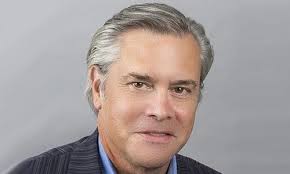
As FT and OTA put together to launch Waskyra throughout the US and doubtlessly Europe, Pharmaceutical Know-how caught up with Craig Martin, founder and CEO of Orphan Therapeutics Accelerator, to seek out out extra concerning the non-profit commercialisation mannequin.
Editor’s notice: This interview has been edited for size and readability.
Annabel Kartal-Allen (AKA): What are the present challenges confronted by gene remedy builders working within the uncommon or ultra-rare illness section?
Craig Martin (CM): There are a number of challenges – significantly for ex vivo, lenti gene modified cell therapies. The manufacturing course of is prolonged, advanced and costly. As soon as a remedy is made, affected person remedy may also pose challenges, as there are sometimes a scarcity of centres that may accommodate and administer such therapies. Lengthy-term follow-up and making certain industrial viability for a really small affected person inhabitants are additionally hurdles that have to be overcome.
One other stumbling block is the FDA’s Precedence Evaluation Voucher (PRV) programme, which hasn’t been prolonged following its expiry in 2024. In lots of of those situation areas, months matter an important deal, so persevering with to delay the provision of a programme can create points for the enterprise mannequin’s viability and sufferers alike. The extra assist organisations within the house can get on the coverage aspect and the higher regulatory flexibility, the simpler it is going to be to get these therapies to sufferers shortly.
AKA: How are regulators presently responding to firms trying to commercialise gene therapies for uncommon or ultra-rare ailments?
CM: Current occasions exhibit that there’s a want to be extra versatile amongst regulators. They’re additionally more and more acknowledging {that a} pathway for uncommon and ultra-rare ailments can’t be the identical because the route used to commercialise medicine in bigger ailments.
Hopefully this may proceed, and we’ll begin to see extra approaches round believable mechanisms and platforms – that means a number of therapies may very well be accredited on the identical pathway in a a lot shorter time period.
AKA: How may you strategy commercialising such a remedy for an ultra-rare illness?
CM: Within the context of OT’s partnership with FT, two nonprofits will work collectively to make Waskyra accessible to sufferers. Whereas FT holds the biologics license software, OTA will assist the distribution and entry of the remedy throughout the US. In the meantime, FT will deal with commercialisation throughout Europe, with the corporate having already obtained a beneficial opinion from the European Committee for Medicinal Product for Human use (CHMP).
Our work will primarily centre round figuring out and deciding on a restricted variety of certified remedy centres which have expertise with these kind of therapies and the situation space, in addition to a speciality distribution accomplice which might cope with the worldwide logistics concerned, since Waskyra is manufactured in Italy.
We can even work with payers and sufferers, to allow them to get a greater understanding on the remedy.
AKA: How do you intend to make your mannequin commercially viable?
CM: Our purpose is to offer entry to a product in a sustainable means, which can’t be achieved via the elevating of charitable funds. Due to this fact, we try to get payers to cowl the prices.
As these are costly therapies, we have to do that in a means that generates enough income to permit us to offer the remedy within the long-term, so we plan to comply with a industrial mannequin – extra on a cost-plus foundation.
We haven’t began the method but, as we’re presently engaged on placing our distribution, entry and affected person service fashions collectively, which is able to assist us to make sure that payers have the data they should facilitate protection and reimbursement.
AKA: Do you foresee any challenges associated to the manufacture of gene therapies using this mannequin?
CM: Probably the most difficult a part of the equation is the logistics, as it’s important to efficiently transport the cryopreserved medication to a remedy centre in time, so a affected person can bear the conditioning routine and obtain the remedy.
This may be partially overcome by working with remedy centres which are acquainted with these kind of therapies, as they perceive the important thing wants of sufferers and have appropriate infrastructure to assist compliant and protected administration. They can even pay attention to the logistics concerned in getting these therapies to sufferers, which is able to assist to ascertain a repeatable and environment friendly course of.
AKA: Do you assume we’ll see a rising variety of nonprofit organisations trying to commercialise superior therapies within the uncommon and ultra-rare illness class?
CM: Sure, I feel necessity is the mom of invention, so there’ll possible be completely different fashions designed to deal with this, as the standard for-profit mannequin clearly isn’t working on this specific subcategory.
This has resulted in a whole lot of cell and gene therapies getting caught in pipelines or being handed again to educational medical establishments, as they don’t have the assets to maneuver them ahead. We have to discover another pathway that permits entry to therapies for sufferers. It’s not simply going to be nonprofit to nonprofit, it’s possible going to be educational medical centres working with organisations like ours to ascertain a unique pathway, as VC-funded biotechs are not ready to commercialise ultra-rare illness remedies.
By way of this, we’d see quite a lot of multi-stakeholder collaboration, and really completely different sorts of conversations with payers or regulators throughout the perfect methods to make these therapies commercially obtainable in a sustainable means.
Cell & Gene Remedy protection on Pharmaceutical Know-how is supported by Cytiva.
Editorial content material is independently produced and follows the highest requirements of journalistic integrity. Subject sponsors usually are not concerned within the creation of editorial content material.

Join our each day information round-up!
Give your enterprise an edge with our main business insights.