The hybrid future for GI: Restored autonomy, satisfaction, worth
January 14, 2026
3 min learn

For me, gastroenterology is a household endeavor. My father is a passionate pediatric gastroenterologist, so fulfilled by serving to sufferers discover solutions and aid that he impressed each my sister and me to enter the sphere.
Nonetheless, the observe of GI has modified so dramatically that it’s practically unrecognizable from what my father skilled even just some brief years in the past.

In the present day, doctor shortages, affected person demand, high-deductible well being plans, reimbursement limitations and observe economics have turned working towards medication into painful workout routines in arbitrage and persistence. These are usually not remoted challenges however the pure penalties of a system out of stability, underscoring why we urgently want a brand new mannequin for GI care supply.
Practising medication pains
Once I accompanied my father to his observe as a baby, I used to be all the time struck by his interactions with sufferers. He knew all of them by identify and had time for every one — the observe felt calm and manageable.
This stands in stark distinction to my sister’s work as a neighborhood gastroenterologist and my work as a tutorial college gastroenterologist immediately. We each handle excessive affected person volumes and subject after-hours messages. Each day, we convey our full intention to offer the extent of care our sufferers deserve, however in observe, there may be by no means sufficient time or assets.
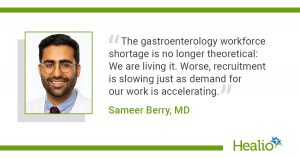
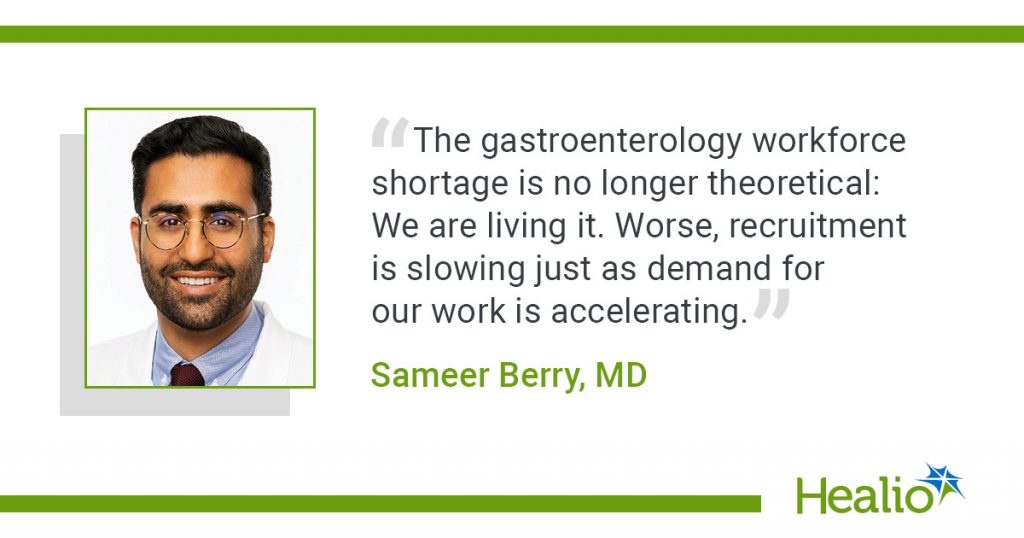
This expertise is the truth for many working towards GIs immediately, and far of it may be attributed to a scarcity of clinicians. The gastroenterology workforce scarcity is not theoretical: We live it. Worse, recruitment is slowing simply as demand for — and the medical complexity of — our work is accelerating. It’s why ACG has labeled the workforce scarcity a strategic precedence, emphasizing the necessity for focused efforts in recruitment, retention and advocacy to fulfill rising affected person demand.
On the identical time, physicians are dealing with declining reimbursements, rising uncompensated administrative calls for and more and more consumer-driven affected person expectations.
The entrance desk crew does their finest to navigate affected person demand, waitlists and follow-ups in makes an attempt to stave off affected person leakage and unmet medical wants, whereas observe managers are tuned into medium- and longer-term operational penalties, corresponding to restricted development, rising doctor burnout, delayed entry, diminished adherence and better affected person churn. With constrained capability, referral networks weaken, margins shrink and practices shift from proactive to reactive care.
The way forward for care is already right here
Whereas some preach technology-driven efficiencies and patient-directed care as the answer to supplier shortages, the truth is that tech alone can not finish this vicious flywheel impact. We’d like extra expert medical companions who may be embedded instantly into care supply.
Luckily, new fashions of digital and in-person collaboration are rising that may combine superior observe suppliers working on the high of their license into present workflows.
When correctly arrange as an built-in member of the crew, these licensed professionals can deal with a broad spectrum of GI acuity, together with evaluation, analysis and ongoing care administration, all billed by means of the native GI observe, totally built-in right into a observe’s digital medical information and aligned with in-person groups.
Some hybrid care companions can even supply expanded multidisciplinary choices with registered dietitians, behavioral well being specialists and care navigators for enhanced longitudinal care, which is particularly vital for maximizing affected person outcomes.
At a minimal, these new embedded digital care groups enable observe physicians to concentrate on what they do finest: managing complicated procedures and high-acuity in-person care. Nonetheless, in addition they make sure that sufferers profit from quicker entry and constant engagement for routine observe interactions. Since they will invoice below the native observe and use the observe’s EMR, it’s a seamless expertise for everybody with minimal added workflows.
For practices that goal to increase their choices and attain, digital care companions can even symbolize a novel channel for brand new affected person referrals. Digital clinics like Oshi leverage their nationwide scale and deep ecosystem relationships with employers and well being plans to drive site-of-service referrals for procedures, infusions and wanted in-person care.
Evolving on the crossroads
GI practices in America are at a crossroads. The previous transactional mannequin is reaching its limits, and until we alter the paradigm, practices will see stagnation. The emergence of those assist fashions isn’t a magic bullet, however it’s a tangible step towards embedding digital longitudinal care into conventional practices. Embracing this mannequin now means unlocking new capability, bettering engagement and in the end sustaining development in an evolving well being care surroundings.
As a gastroenterology neighborhood, we owe it to our sufferers— and ourselves— to work in another way. My father discovered pleasure in his observe at a time when the system allowed it; my sister and I are striving to maintain tempo. I imagine we are able to construct long-term strategic partnerships that allow everybody to thrive.
For extra data:
Sameer Okay. Berry, MD, MBA, is cofounder and chief medical officer at Oshi Well being, assistant professor of drugs within the division of gastroenterology and hepatology at NYU Grossman College of Drugs, and cohost of Healio’s “Intestine Discuss” podcast. He may be reached on X at @sameerkberry.
Sources/Disclosures
Supply:
Knowledgeable Submission
Disclosures:
Berry experiences working for Oshi Well being.

Ask a medical query and faucet into Healio AI’s information base.
- PubMed, enrolling/recruiting trials, tips
- Scientific Steerage, Healio CME, FDA information
- Healio’s unique every day information protection of medical information